


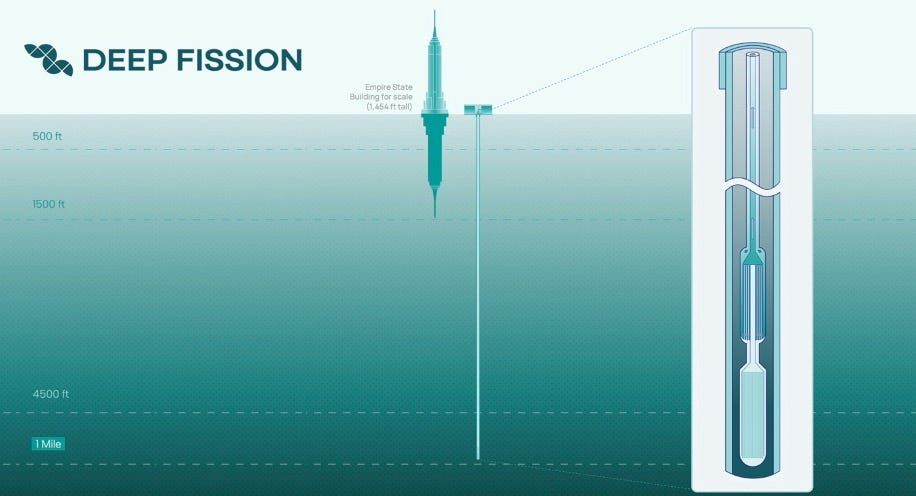
In August 2024, Deep Fission announced it was emerging from “stealth mode” and had raised $4 million in a “pre-seed round” of funding. The company said it was “positioned at the forefront of advanced energy technology” and aimed to “redefine the future of nuclear power.”
Just 22 months later, Deep Fission went public on the Nasdaq, in a deal that valued the company at about $1 billion. In doing so, it became the eighth US-based pure-play SMR company to go public. As I wrote in June, in “Another Day, Another SMR Startup Goes Public,” Deep Fission’s IPO added yet more competition to the small modular reactor market, which “isn’t just crowded, it’s overcrowded.” I pointed out that our compendium, SMR Intelligence US, now lists 42 companies trying to develop and commercialize SMRs, and that dozens of foreign companies are trying to do the same. I continued:
Markets are brutally efficient. They always separate the weak players from the strong ones. And over the past two weeks, it has become clear that an increasing number of SMR contenders are desperate for capital. In fact, they’re so desperate that they are going public in the hope that doing so will help them stave off bankruptcy. These companies are accessing public markets because nuclear energy is suddenly cool again, and many startups are touting their reactors as a way to help meet the soaring power demand coming from AI and data centers.
But going public doesn’t guarantee commercial success. As I have said repeatedly over the past few months, a big shakeout is looming in the SMR market. Furthermore, all of the US-based publicly traded, pure-play SMR companies, including Deep Fission, are seeing huge declines in their share prices.
Deep Fission claims its “gravity reactor” will revolutionize the power sector, and its promotional materials include the tagline: “powering humanity from a mile underground.” But a new report on Deep Fission by the short-selling firm Iceberg Research spotlights the myriad challenges that the company faces.
In this piece, I will look at Iceberg’s report. I also explain why the Nuclear Regulatory Commission’s recent approval of a construction permit for the Tennessee Valley Authority to build a BWRX-300 at Clinch River is significant — and why the TVA still has, in the words of Jimmy Cliff, many rivers to cross.
