Energy Wars
All of today’s conflict hotspots are, in one way or another, about energy. Snatching Maduro with a “well-oiled machine” is just the latest example.

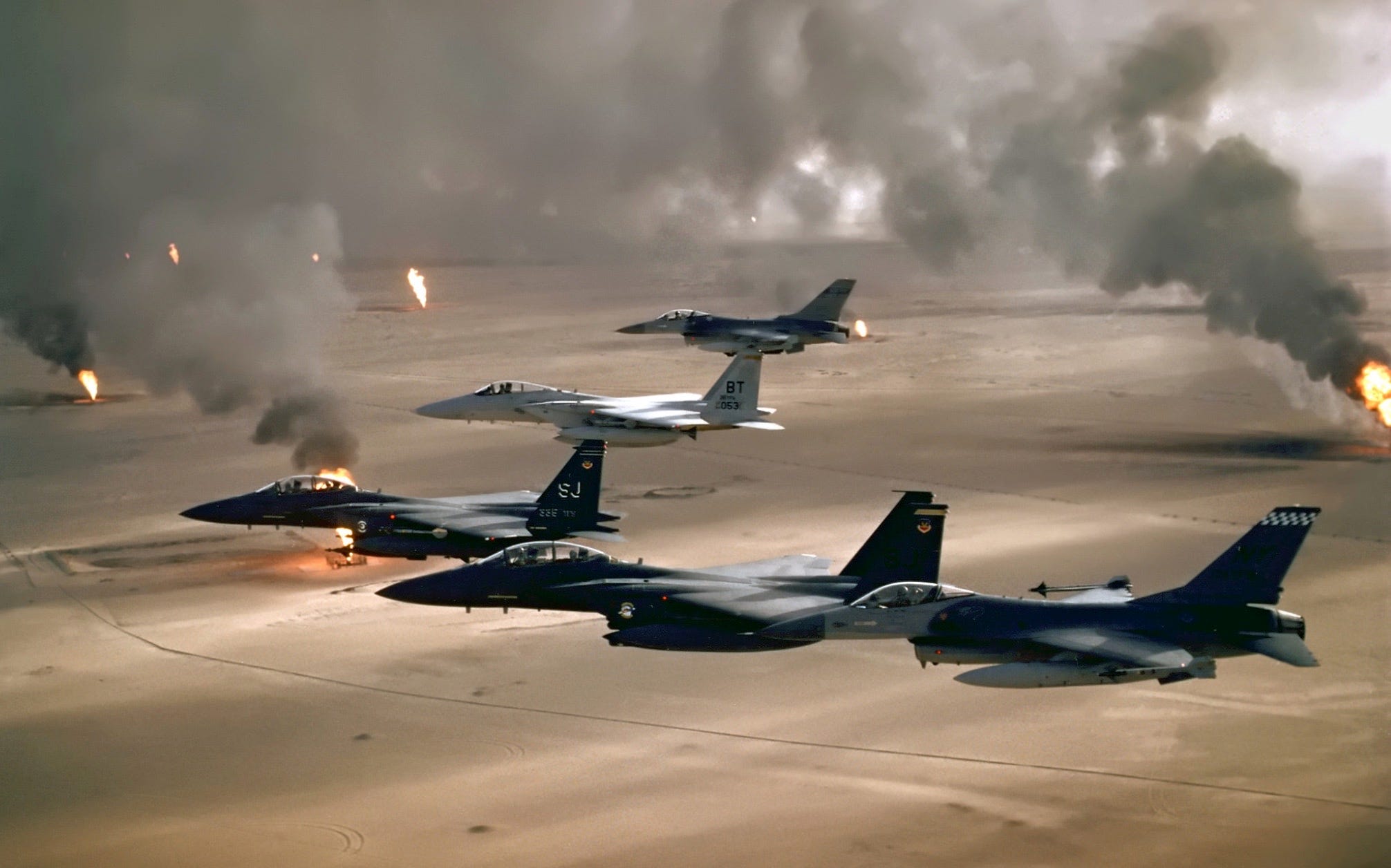
During World War I, the US Army had three times as many horses and mules in its arsenal as trucks. A British official later remarked that the Allies “floated to victory on a wave of oil.” After the war ended, one analyst concluded that Germany’s leaders never forgot that their loss in the war was “due as much to a lack of oil as to any other single commodity.”
During World War II, oil proved to be the decisive commodity. Indeed, oil was the Achilles heel of the German and Japanese militaries throughout the conflict. In their landmark 1987 book, Oil & War, Robert Goralski and Russell W. Freeburg explain that while the German army gained fame for the blitzkrieg tactics of using tanks and trucks to capture much of western Europe, Nazi forces were continually running short of motor vehicles and the fuel to run them. They explain that in 1940, during Germany’s invasion of France:
Horse-drawn wagons continued to serve as the cornerstone for infantry division support. The animals in each division required a total of 53 tons of oats and hay daily. That feed had to be transported or appropriated along the way. Even the infantry divisions needed gasoline for their motor vehicles, about 7,000 gallons per division each day. In pure tonnage, a German infantry division required three times as much horse fodder as motor fuel. (Emphasis added.)
Meanwhile, the Allied forces relied on massive quantities of oil — much of it supplied from Texas oilfields via the Big Inch and Little Big Inch Pipelines — that fueled the planes, ships, tanks, trucks, and jeeps that provided the decisive strategic edge in the conflict. Since World War II, oil resources and control over oil flows have been the focal point of nearly every major geopolitical battle. Whether it’s the Carter Doctrine, which declares that the US will not allow “any outside force to gain control of the Persian Gulf region,” the First Iraq War, the Second Iraq War, or the US military’s audacious snatching of Nicolás Maduro from Caracas last week, oil remains the world’s most important commodity.
In 1927, Mao Zedong famously declared that “political power grows out of the barrel of a gun.” If Mao were around today, he’d know that economic and geopolitical power grows out of a barrel of oil.
In 1973, the year that the OPEC oil embargo sent shockwaves through the global economy, Soviet party chairman Leonid Brezhnev declared that the Soviets wanted to “gain control of the two great treasure houses on which the West depends: the energy treasure house of the Persian Gulf, and the mineral treasure of southern Africa.”
Put short, the US military’s capture of Maduro isn’t an outlier. It’s the continuation of a decades-long battle for control of the fuel that drives the global economy. That capture, by the way, required the use of more than 150 aircraft, including B-1 bombers, all of which burn staggering amounts of oil. (The B-1 burns about 3,000 gallons of jet fuel per hour.) In a telling assessment of the operation, the Chairman of the Joint Chiefs of Staff, General Dan Caine, said that “failure of one component of this well-oiled machine would have endangered the entire mission.”
The US foray into Venezuela is the latest example of power politics in a world where the conflicts are about oil, tankers, pipelines, refineries, and power plants. Let’s use the energy lens to examine the conflicts now raging from Iran to Gaza and from Ukraine to Yemen — and of course, Venezuela.
Plus, three recent media hits.