The Data Center Backlash Is Global
The AI boom is fueling land-use conflicts from Indiana to Dublin. We've documented dozens of them in the new Data Center Rejection Database. And remember: 30% off new subs until Saturday.
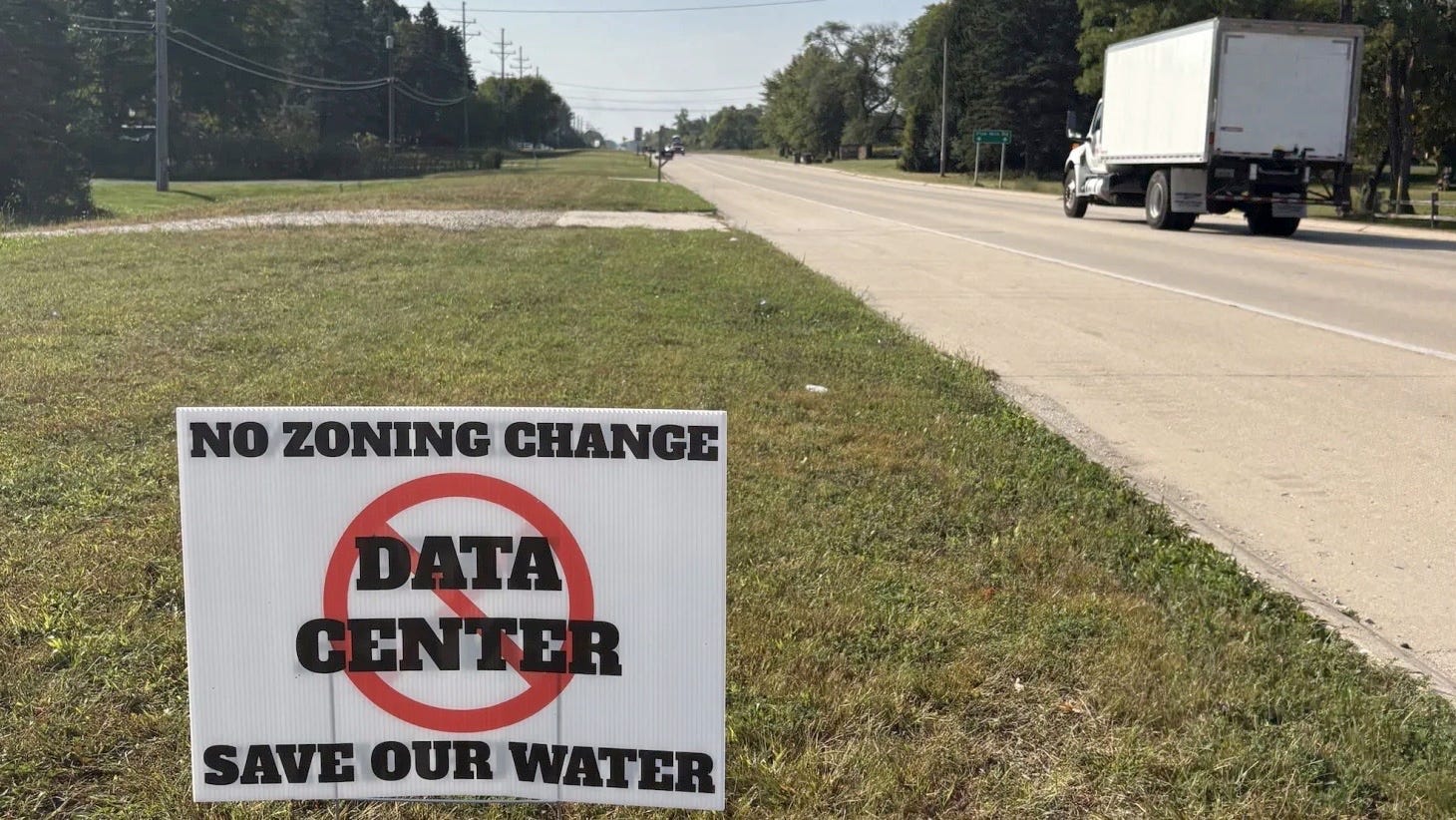
In September, minutes before the Indianapolis City-County Council was slated to vote on a rezoning proposal that would have allowed Google to build a huge data center on a 468-acre tract of land, the tech behemoth (market cap: $3.8 trillion) withdrew the project from consideration.
Axios reported that hundreds of people attended the meeting “to protest the data center, requiring two overflow rooms for meeting-goers at the City-County Building” and that the company’s rezoning proposal “was expected to fail.” After Google announced it was pulling its request, “loud cheers from the crowd in the council room, many of whom were holding signs in opposition to the project.”
As I’ve documented in the Renewable Rejection Database, residents around the world are fighting back against the encroachment of Big Wind and Big Solar. Now Big Tech is facing the same type of land-use conflicts. The reasons for opposition to AI data centers are similar to the concerns people have raised in opposition to Big Wind and Big Solar. They include concerns about the quality of their neighborhoods, property values, water usage, electricity costs, and deep distrust of big business in general and Big Tech in particular. As a member of the Indianapolis council who led the opposition to Google’s project explained, his constituents were concerned about “quality-of-life impacts.”
Sure, AI may be a world-changing technology, but the rush to build massive new data centers has resulted in dozens of rejections or restrictions on projects from Indianapolis to Dublin. These rejections are significant because Big Tech will spend about $375 billion on data centers this year, and another $500 billion in 2026. But much of that spending depends on local communities’ willingness to host those giant facilities.
To detail the dimensions of the backlash, we created the Data Center Rejection Database. With the help of my ace Berlin-based researcher, Jacob, we found more than two dozen rejections or restrictions of data centers here in the US. Let’s take a look.