

Don't.
Five reasons why Trump should not bomb Iran’s electric grid.

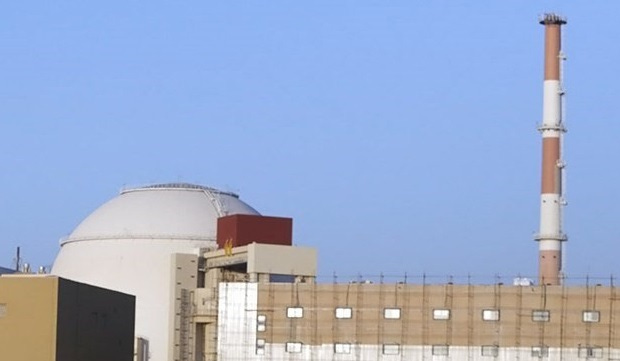

After three weeks of the war against Iran, I have tried to maintain an intellectual and emotional detachment from President Trump’s decision to start the conflict. Yes, Iran’s theocratic regime is dangerous, and it has been seeking the destruction of America for decades. I get that. But by joining with Israel in launching widespread bombing attacks against Iran, Trump is playing a dangerous game that could trigger a wider conflict that could drag on for months, or even years, to come.
On Friday, Trump said he was thinking about winding down US attacks on Iran. But on Saturday afternoon, he delivered an ultimatum to Iran’s leaders, saying that unless they agreed to fully open the Strait of Hormuz within 48 hours, he would begin bombing the country’s power grid. His exact threat, which he wrote on Truth Social, was that if Iran doesn’t open the Strait, the US “will hit and obliterate their various power plants, starting with the biggest ones first.”
My response to Trump’s latest threat is simple: Don’t.

As I have written many times (see here and here), electric grids are commonly targeted during wars. A year ago, I noted that more than any conflict in history, the Russia-Ukraine war “has been about electricity.”
But there are at least five reasons why Trump should not bomb Iran’s power grid.
First, the grid is not a legitimate military target. Since February 28, when the US and Israel began bombing Iran, the argument we’ve heard from Trump and his allies is that the purpose of the attacks was to destroy Iran’s ability to deploy nuclear weapons and ballistic missiles against its neighbors. That argument has now expanded to preventing Iran from slowing or stopping ships from transiting the Strait of Hormuz. Iran’s electric grid is civilian infrastructure. Destroying it does not serve a military purpose.
Second, destroying Iran’s power grid could, within a month or two, result in tens of thousands, or even hundreds of thousands, of civilian deaths. The electric grid is the Mother Network, the system upon which all of our most important networks – fresh water supplies, wastewater, communications, hospitals, and communications -- depend. It is, as Chris Keefer memorably put it, our “civilization life support system.” By destroying Iran’s grid, Trump could turn much of Iran into a humanitarian disaster zone.
Third, it invites wholesale retaliation against the power grids of Iran’s neighbors, and ours. Electricity grids are fragile things. Damaging them can easily be done with a myriad of weapons, including small arms, drones, missiles, and bombs. If Trump bombs Iran’s grid, it invites our adversaries to do the same. Indeed, just a few hours after Trump made his threat, Iran’s parliament speaker Mohammad Baqer Qalibaf warned that critical infrastructure and energy facilities in the Middle East could be “irreversibly destroyed” if Iranian power plants are attacked. In a post on X, he wrote:
Immediately after the power plants and infrastructure in our country are targeted, the critical infrastructure, energy infrastructure, and oil facilities throughout the region will be considered legitimate targets and will be destroyed in an irreversible manner, and the price of oil will remain high for a long time.
Fourth, if the US bombs Iran’s power grid, it will hinder the ability of the next ruling regime (friendly to the US or not) to manage Iran’s society. It may also result in electricity shortages in other countries. Why? Iran exports power to Afghanistan and Pakistan.
Fifth, it’s apparent that Trump has fallen into the escalation trap. As I noted on March 4, that term has been popularized by the University of Chicago’s Robert Pape. As he explained it in a March 14 article in The Guardian, he said, when the war begins, “The attacker still has escalation dominance, so there is a doubling down, which then moves up the escalation ladder and that still does not lead to strategic success. Then you reach stage three, which is the real crisis, where you are contemplating far riskier options.”
The Guardian went on to summarize Pape’s view, writing that the “Trump administration had become mesmerized by the initial attack and had an ‘illusion of control’ based on the accuracy of its weapons. All of this has pushed Tehran towards its own model of escalation, one with a far wider global economic and political impact, Pape and other critics say.”
By declaring war on Iran, Trump risked a wider war in the Middle East. By issuing yet another deadline, he has set an escalation trap for himself. If he bombs Iran’s power plants, he risks setting off an even more serious conflict in the region. If he doesn’t bomb Iran’s power plants, he loses face.
The situation in Iran reminds me of an interview I heard last month of a former senior US military official, who, it was clear, was not a fan of Trump. The official said that during his second term in office, Trump has repeatedly made moves that alienate our allies. He called Trump’s moves “strategy-free action.”
Did Trump consult with top military leaders or our allies before issuing his ultimatum? Is there a long-term strategy at work here? If so, what is it? Or was this yet another example of Trump’s whim? We may not know the answer to those questions. But by threatening to destroy Iran’s power grid, Trump has set the US on an even more perilous course in the Middle East.
Before you go, please click that ♡ button, share, and subscribe. Thanks.
This is good:
This morning, Trump said he is delaying plans to bomb Iran's grid for five days due to "good" talks with the Iranian leadership.
https://www.geo.tv/latest/656883-trump-puts-off-threat-to-bomb-iran-power-grid-iranian-agency-denies-report-of-talks
All the pundits and Trump haters are arm chair quarterbacking the Presidents decision to go. Imagine the Iranians capabilities and the possibility of a nuke if we had not gone now? They have 2500 mile ballistic missiles no one knew about, who is to say they were not days/weeks or months away from the bomb?