

Power Grab: Texas’ $33B High-Voltage Heist
ERCOT’s 765-kV transmission plan would seize thousands of acres, funnel billions to transmission monopolies, and jack up ratepayer bills. No wonder it’s facing fierce opposition.
The billionaires, bureaucrats, and academics make it sound easy.
In his 2021 book Speed & Scale: An Action Plan for Solving Our Climate Crisis Now, John Doerr, the climate activist and Silicon Valley billionaire, claimed that the US could slash its emissions to zero by 2040. Making that happen, he wrote, would require electrifying nearly everything in our society, and “a doubling of the transmission system above business as usual.”
In 2022, Michael Polsky, the billionaire founder of Invenergy, a Chicago-based alt-energy firm that has collected hundreds of millions of dollars in federal subsidies and has repeatedly sued rural communities to try to force them to accept solar and wind projects they don’t want, co-authored an article which claimed that the US “should invest in long-distance, high-capacity transmission lines” and “modernizing” the grid to accommodate more renewable energy. Doing so, Polsky claimed, will “increase reliability” and “send an important message to the world.”
In 2023, the Department of Energy released the “National Transmission Needs Study,” which said that “in future scenarios with moderate load but high clean energy assumptions,” the US will need “a 57% growth in today’s transmission system.”
Also, in 2023, Jesse Jenkins, who heads the Zero Lab at Princeton University, told Utility Dive that by 2035, “we’re going to need to add about 75,000 miles of high voltage transmission lines, enough to run from New York City to Los Angeles and back 15 times...That sounds like a lot for a country not used to building big things. But we have built big things in the past, this is not unprecedented, and shouldn’t be viewed as impossible.”
In 2025, a report by Americans for a Clean Energy Grid and Grid Strategies lamented the lack of growth in the high-voltage grid. It said the US needs to build “roughly 5,000 miles of new high-capacity transmission per year,” to ensure “grid reliability, support economic growth, and deliver low-cost power to customers.”
But as I noted in these pages in 2024, the odds of building such huge amounts of new high-voltage transmission capacity are “as my father used to say, ‘slim and none, and Slim left town.’”
That historical context is relevant because one of the hottest political issues in Texas today (along with the backlash against data centers) is ERCOT’s 765-kV Strategic Transmission Expansion Plan (STEP).
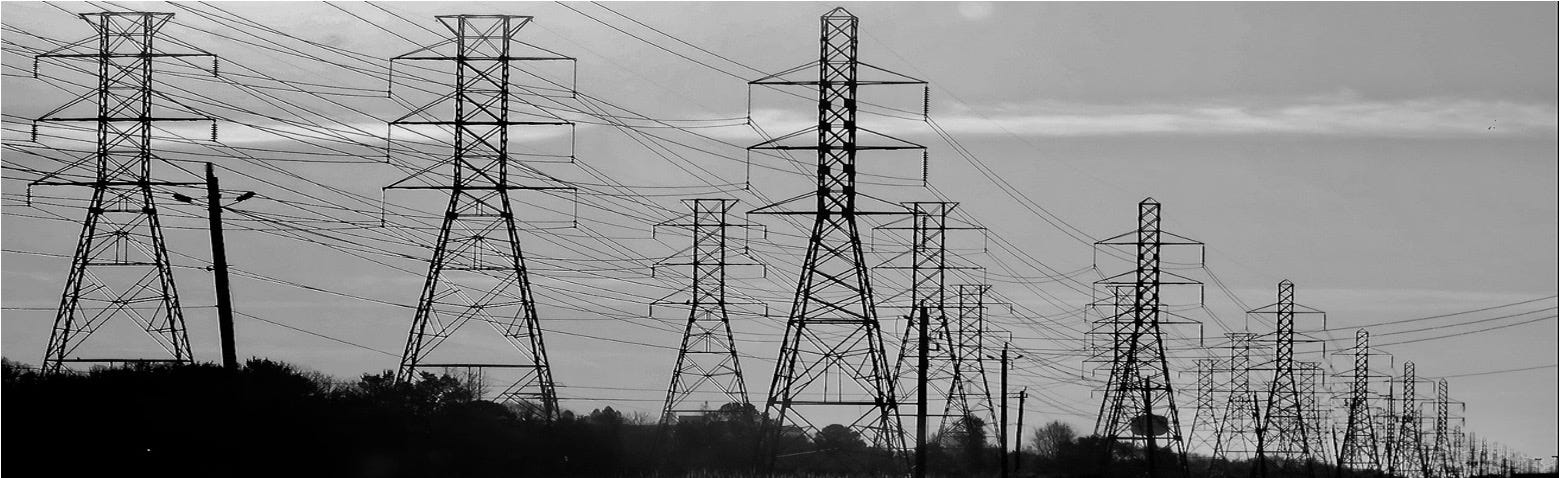
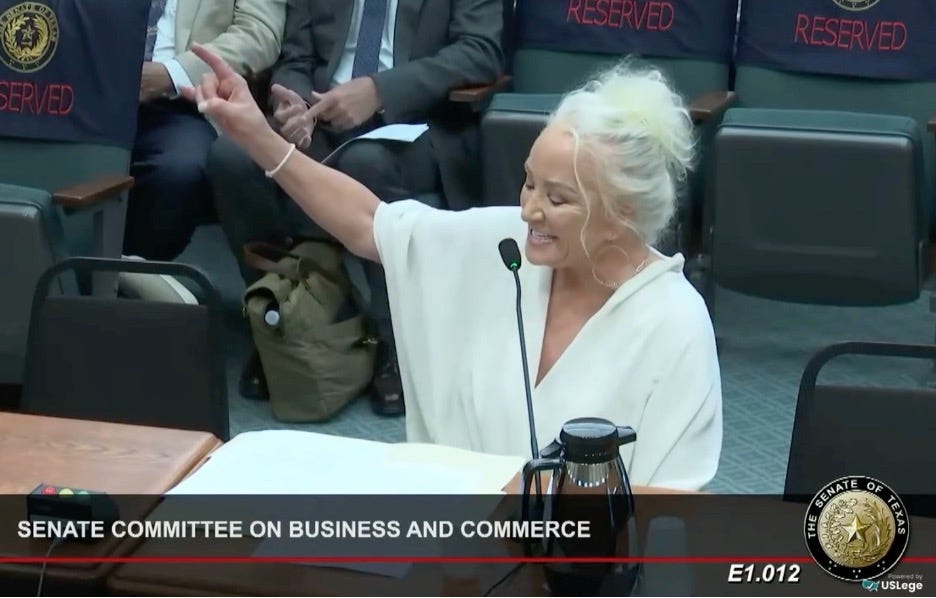
If built, STEP will be one of the largest grid expansions in US history. The project calls for building 2,468 miles of new 765-kV lines, 649 miles of new 345-kV lines, and acquiring (or rather, condemning) about 3,400 miles of new right-of-way. It would also roughly double the amount of 765-kV capacity in the US. But the project, which the Texas Legislature never mandated, is facing fierce opposition. Last month, over 40 Texas state lawmakers signed an amicus brief asking the Public Utility Commission to delay action until the commission “fully evaluates the overall need” for the transmission lines. On Wednesday, I watched a hearing at the Texas Capitol, where more than 200 landowners, including country singer Tanya Tucker, testified before the Texas Senate Business and Commerce Committee. Tucker, who lives on a ranch in Burnet County, told the committee, “I’m very disappointed in how this has been handled. This isn’t the way we do things in Texas.” Tucker was followed by passionate pleas and testimony from ranchers, landowners and officials, all of them opposed to high-voltage lines. The hearing lasted more than 15 hours.
There’s no doubt that the US power grid needs more capacity, and more high-voltage capacity is being built. But a sober look at the STEP project shows that it is little more than a massive cash grab and land grab by some of America’s biggest electric utilities. Further, while big utilities and Texas bureaucrats are claiming the new 765-kV lines will help accommodate more generation capacity and increase reliability, the project provides yet another example of how Texas regulators are bending over backward to connect more weather-dependent generation to the ERCOT grid and, in doing so, saddle ratepayers with billions of dollars in new costs.
Let’s take a closer look.

Keep reading with a 7-day free trial
Subscribe to Robert Bryce to keep reading this post and get 7 days of free access to the full post archives.